








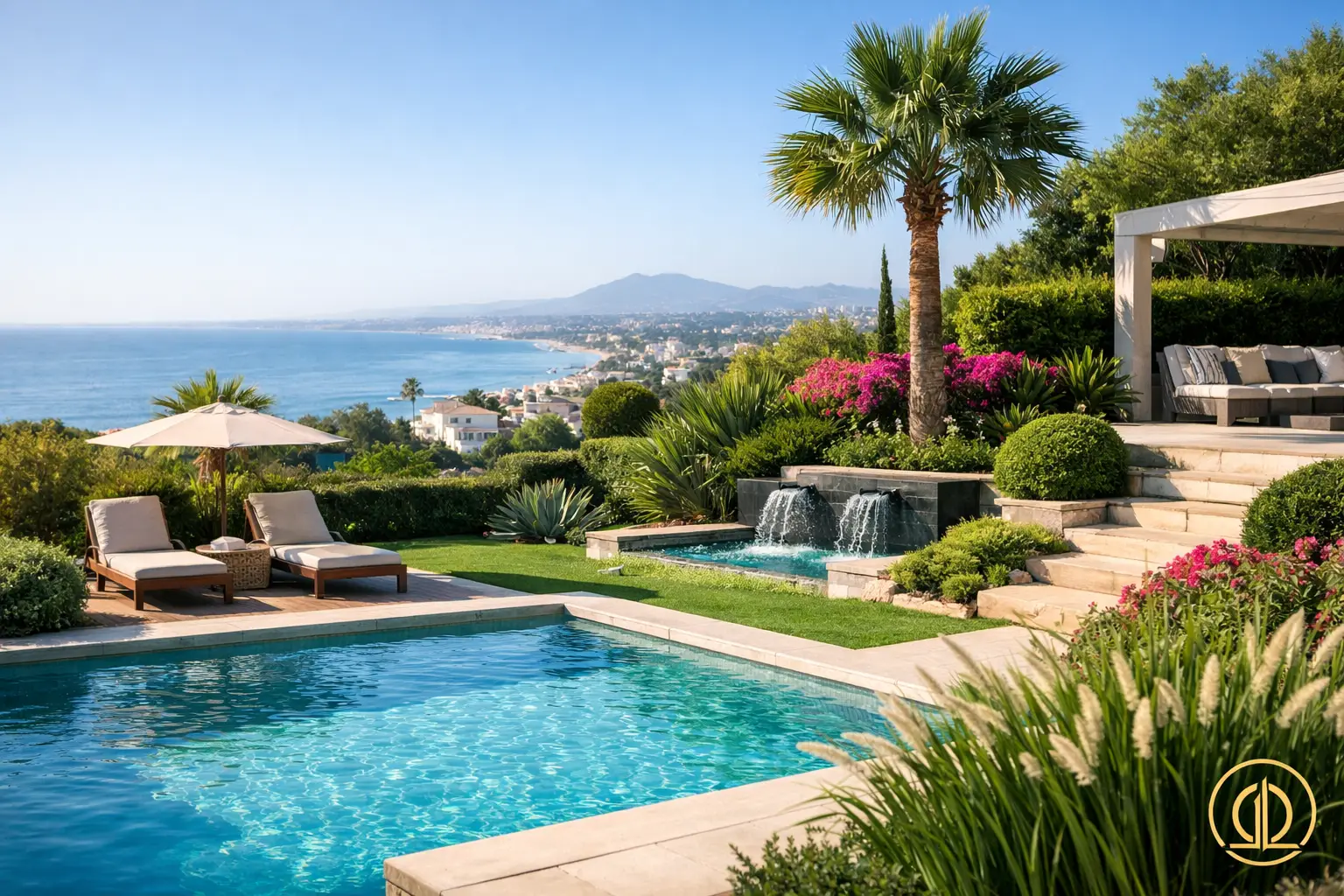
A Costa del Sol garden design has to earn its place. It should feel inviting on a bright January afternoon, provide real shade in August and remain manageable when you are away from the property. For a villa in Marbella, a townhouse in Mijas or a sea-view home near Estepona, the garden is not an afterthought. It is part of the lifestyle buyers imagine when they first step through the gate.
The strongest outdoor spaces do not rely on a crowded palette of plants or a newly laid lawn. They respond to the plot, its orientation, the local water supply and how the home will actually be used. A well-planned garden can make a compact terrace feel more generous, give a family villa distinct spaces for dining and relaxing, and present a property at its best when the time comes to sell.
Start with the plot, not the planting plan
The Costa del Sol has one of Europe’s most enviable climates, but it is not one single climate. A garden close to the sea in Torremolinos may face salt-laden winds, while a hillside plot above Benalmádena can be exposed to strong sun, faster drainage and cooler evenings. Inland areas around Mijas Pueblo can have different soil conditions and more pronounced temperature changes again.
Before choosing finishes or plants, assess where the sun falls in summer and winter, how water moves through the plot, and which areas are exposed to wind or overlooked by neighbouring homes. These details determine whether a dining terrace is pleasant at lunchtime, whether a planted border will thrive and where privacy can be created without blocking a valuable view.
Orientation is especially important. South- and west-facing spaces need shade that performs when the sun is at its fiercest. This may mean a pergola, a mature tree positioned carefully, a fixed canopy or a combination of structures and planting. A north-facing courtyard, by contrast, may benefit from lighter surfaces and plants that cope with less direct sun. The right answer depends on the property rather than a fashionable garden image.
Costa del Sol garden design for everyday living
A successful garden usually has a clear purpose for each area. Rather than treating the exterior as one broad expanse, consider the natural movement from inside the home to outdoors. The space nearest the kitchen often works best for relaxed meals and morning coffee. A separate seating area can face the sunset or a view, while a quieter corner may be better suited to reading, stretching or simply enjoying the scent of planting.
For homes used by several generations, level access deserves attention. Wide, even paths and gentle changes in height make a garden safer and easier to enjoy for children, guests and older family members. They also create a more polished impression than a collection of disconnected terraces or awkward steps.
Privacy should be designed with restraint. Tall, solid screening can make a plot feel closed in and may reduce light and airflow. Layered evergreen planting, slatted screens, pergolas and carefully positioned trees can provide discretion while retaining the openness that makes Mediterranean homes so appealing. In properties with sea or mountain views, sightlines should be protected from the beginning.
Shade is a comfort feature, not a finishing touch
In the height of summer, an unshaded terrace can go unused for much of the day. Planning shade early allows it to become part of the architecture rather than an improvised addition. A permanent pergola may suit a main dining area, while adjustable awnings can offer flexibility over a smaller terrace.
Climbers can soften structural shade, but they need the right support and ongoing pruning. Deciduous vines can be useful where winter sunshine is welcome, whereas evergreen climbers provide more consistent cover. The choice should reflect the garden’s aspect and the level of maintenance you are comfortable arranging.
Use water carefully and visibly well
Water is a precious resource in southern Spain, and gardens should be planned accordingly. A large lawn may look familiar to UK buyers, but it can demand substantial irrigation and regular care in hot weather. In many plots, a smaller lawn combined with gravel, paving, groundcover and planted borders offers a more sensible balance.
Drip irrigation delivers water directly to root zones and is generally preferable to broad spray systems. It can be programmed around seasonal needs, although it still requires checking for leaks, blocked emitters and changes in planting. Grouping plants with similar water requirements makes the system easier to manage and helps avoid overwatering drought-tolerant species.
There is no need for a water-wise garden to feel sparse. The contrast of silvery olive foliage, architectural agaves, textured grasses, rosemary, lavender, citrus and flowering shrubs can create colour and movement throughout the year. Plant selection should always be guided by the particular microclimate, as even resilient species need time and attention to establish well.
Materials that suit the climate and the home
Outdoor finishes are exposed to intense ultraviolet light, heat, occasional heavy rain and pool water. Pale stone or porcelain can help reduce surface heat around seating areas, although very bright finishes may produce glare. Dark materials can look striking but may become uncomfortable underfoot in full sun.
Slip resistance matters around pools, external steps and shaded areas where moisture can linger. It is also worth considering how surfaces will age. Natural stone gains character but can require sealing and specialised cleaning. Quality porcelain is lower maintenance and available in convincing stone-effect finishes, but the installation and drainage details must be right to avoid an artificial appearance or standing water.
A cohesive garden normally echoes the property’s architecture. A contemporary new development may suit clean-lined planters, restrained paving and sculptural planting. A traditional Andalusian villa can carry warmer terracotta tones, natural stone and softer, more layered borders. Mixing too many styles is one of the quickest ways to make an outdoor space feel less considered.
Treat drainage and maintenance as part of the design
A beautiful terrace loses its appeal if water runs towards the house during a storm. The Costa del Sol’s dry periods can make it easy to overlook drainage, yet intense rainfall can expose weak falls, blocked gullies and poorly positioned planting beds. A garden plan should account for surface levels, drainage channels and safe routes for water away from the property.
Maintenance is equally practical. Mature planting looks wonderful, but dense hedging, complex topiary and delicate lawn areas require regular professional attention. For second-home owners, an easier garden can offer greater peace of mind than one that needs weekly intervention. Ask how often pruning, irrigation checks, poolside cleaning and seasonal feeding will be required before committing to a scheme.
This does not mean choosing the simplest possible garden. It means investing in features that will continue to look good with realistic care. Larger planting groups, reliable irrigation, accessible service points and durable materials often deliver a better long-term result than numerous small, high-maintenance details.
Designing with future value in mind
Garden improvements can strengthen a home’s presentation, particularly where the exterior currently feels unfinished or disconnected from the living areas. Buyers often respond quickly to a welcoming entrance, a clean pool surround, defined dining space, established privacy and planting that makes the property feel cared for.
However, personal taste still matters. An extravagant feature that dominates a modest plot, a very specialised entertaining area or high-maintenance landscaping may not suit every future buyer. If resale is a consideration, aim for quality, proportion and flexibility. A well-designed garden should help prospective owners picture their own life there, not feel like a space they would need to undo.
For owners preparing a property for sale, the most valuable work is often targeted: repairing irrigation, refreshing tired surfaces, pruning overgrown planting, replacing dead specimens and making outdoor rooms easy to understand. Photographs and viewings benefit enormously when terraces are clear, cushions are in place and the garden looks ready to be enjoyed.
Bring the plan together before work begins
A garden project becomes simpler when decisions are made in the right order. Begin with levels, drainage, access, lighting and irrigation, then move to hard landscaping, structures and planting. Trying to add electrical points or drainage after a terrace has been finished is disruptive and usually more expensive.
Lighting deserves quiet consideration. Warm, low-level illumination can make paths, steps and dining areas feel safe and welcoming after dark, without washing out the garden or disturbing neighbours. Focus on useful light and subtle highlights rather than turning every tree or wall into a feature.
The most rewarding gardens on the Costa del Sol feel natural because they are carefully planned. They respect the sun, the water and the way a household wants to live. Whether you are improving a new purchase or preparing an established home for its next chapter, Realsea can help coordinate garden improvements that transform a property into a true home – and ensure the outside feels every bit as considered as the rooms within.